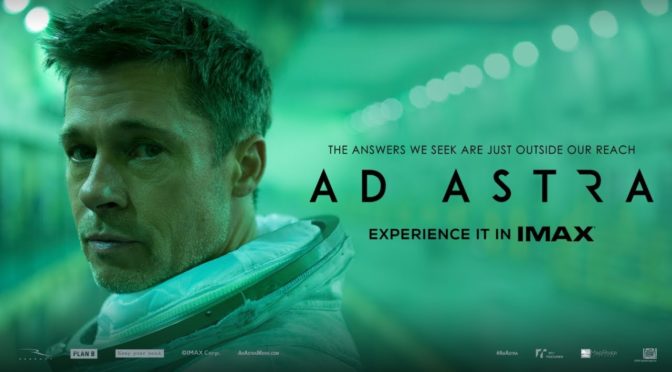
Ad Astra is an original sci-fi title from indie filmmaker James Gray (The Lost City of Z) and one of the quietest studio films in years. In the near future, Roy McBride (Brad Pitt; The Tree of Life), a decorated astronaut, is called in for a classified mission. His father Clifford (Tommy Lee Jones; No Country for Old Men), a hero and space pioneer, was sent on a decades long mission to Neptune that went missing years ago. The government now believes that he may still be alive and that his ship may have something to do with the dangerous power surges wreaking havoc on Earth. They hope that Roy, as Clifford’s son, can contact him.
Gray’s depiction of space is merciless and worn. At this point in time, bases have been established on the moon and on Mars with even commercial travel available. These environments are nothing new and have lost their sense of wonder. They aren’t quite the grimy settings of Blade Runner, but space travel has become as mundane as an airplane trip and bases on the moon look like run down subway stations. Roy remarks that humans have created the very things they ran away from when leaving Earth. The main difference from life on Earth and life in space is the inherent danger it carries. The slightest mistake could lead to death in the harsh, unforgiving setting. The moon has unpatrolled areas, where travelers are at risk of attack, and the power surges mean spacecraft could malfunction at any time. It makes the film’s vision of the future both pragmatic and precarious.
This danger is further shown in the film’s setpieces. On Earth, on other planets, and in space, Ad Astra is not above thrilling its audience. Gray, a director not previously known for his action skills, stages each scene with intensity. Where other films like Gravity repeated similar scenarios to the point of diminishing returns, Ad Astra uses completely different perspectives for each climactic event. The action scenes feel original and perilous. Even when it’s clear something is about to go wrong, Gray does so with a completely shocking and unexpected danger that keep the sequence as fresh as it is deadly.
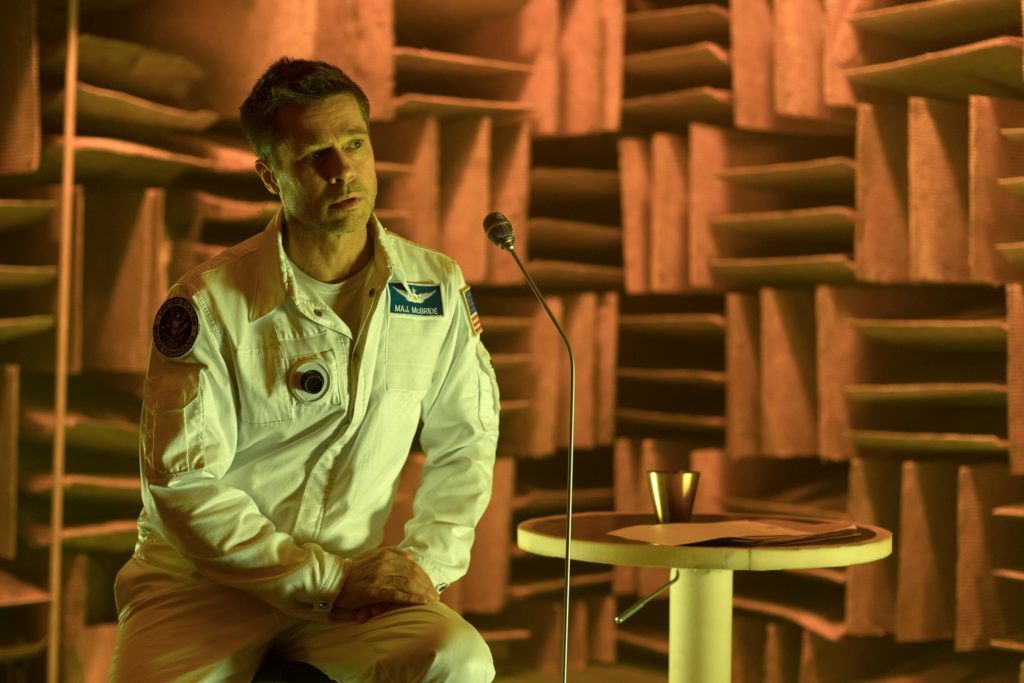
The majority of the film relies on Pitt’s performance and he is more than suited to the task. Pitt’s face dominates the screen and is a complex painting of emotion. He is at once calm and professional while still communicating the anxieties he hides underneath. Despite Roy’s incredible talents and feats across so many areas, he isn’t cocky. Pitt makes him a dutiful soldier, committed to his task above all else, including his own feelings. Within his always capable demeanor is sadness. There is an air of despair beneath Pitt’s performance and he tows the line between a firm external appearance and internal struggle in a way that would make Ryan Gosling jealous.
The film has a surprising amount of voiceover from Pitt that is used to contrast his inner feelings with his image. While it does provide needed insight into Roy’s state of mind, Gray is overreliant on this technique. The sheer amount of narration is intrusive and it prevents the audience from drawing their own conclusions as the narration loudly and frequently tells instead of letting the film’s visuals show Roy’s emotions.
While the title and plot may imply an outward focus, Gray’s interests are internal. On the outside, Roy is the ideal soldier. Characters comment on his unbreakable composure stating that he has never been recorded with a pulse over 80 beats per minute, even when his life was in danger. He is constantly facing psych evaluations, all of which point to a single desired ideal: cold, unfeeling stoicism. The ideal space explorer shows and feels no emotion and, on the surface, Roy meets this criteria, but he can’t reconcile these so-called virtues with his emotions. He still feels anxiety, still misses his father, still misses his wife, but is forced to compartmentalize these thoughts and numb himself to fit into the desired mold. Gray uses the film’s deliberate pace to linger on Pitt’s expressions and force the audience to evaluate them beyond his initial impression. The film becomes an exploration of how the ideal of a stalwart hero manifests in real life and the consequences and conflict it creates in those who strive for it. As Roy’s voyage continues, we see him grapple with these unattainable goals and Pitt’s inner turmoil is deeply moving, despite the overuse of voiceovers. With Ad Astra, Gray has created a thrilling, contemplative, and emotional outer space voyage to explore the inner self.

4/5 stars.
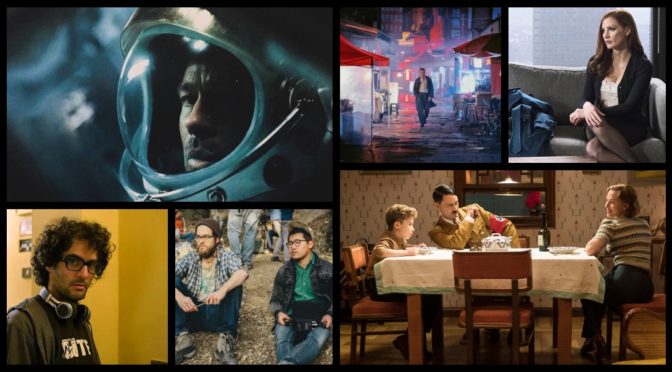


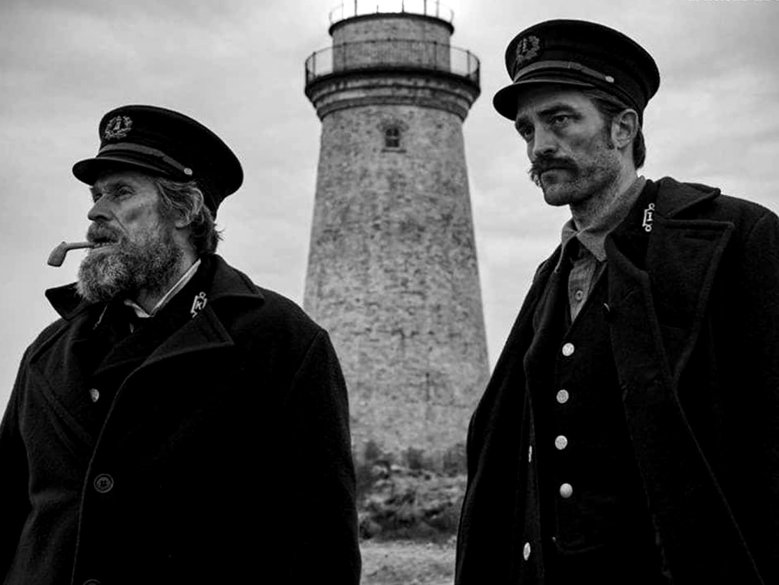 The Witch is one of the most interesting horror movies of the past few years, with meticulous period detail and escalating paranoia that few films can achieve. Robert Eggers’s follow up is sure to be in the same vein with Willem Dafoe playing an elderly lighthouse keeper in this dark horror-fantasy.
 Very little is known about the newest film from the Daniels, but their involvement is enough to warrant a place on this list. The film is described as an “inter-dimensional action film” with Michelle Yeoh and Awkwafina of Crazy Rich Asians starring. I’m personally not a huge fan of Awkwafina’s style of humor, but the Daniels’ history of creating
 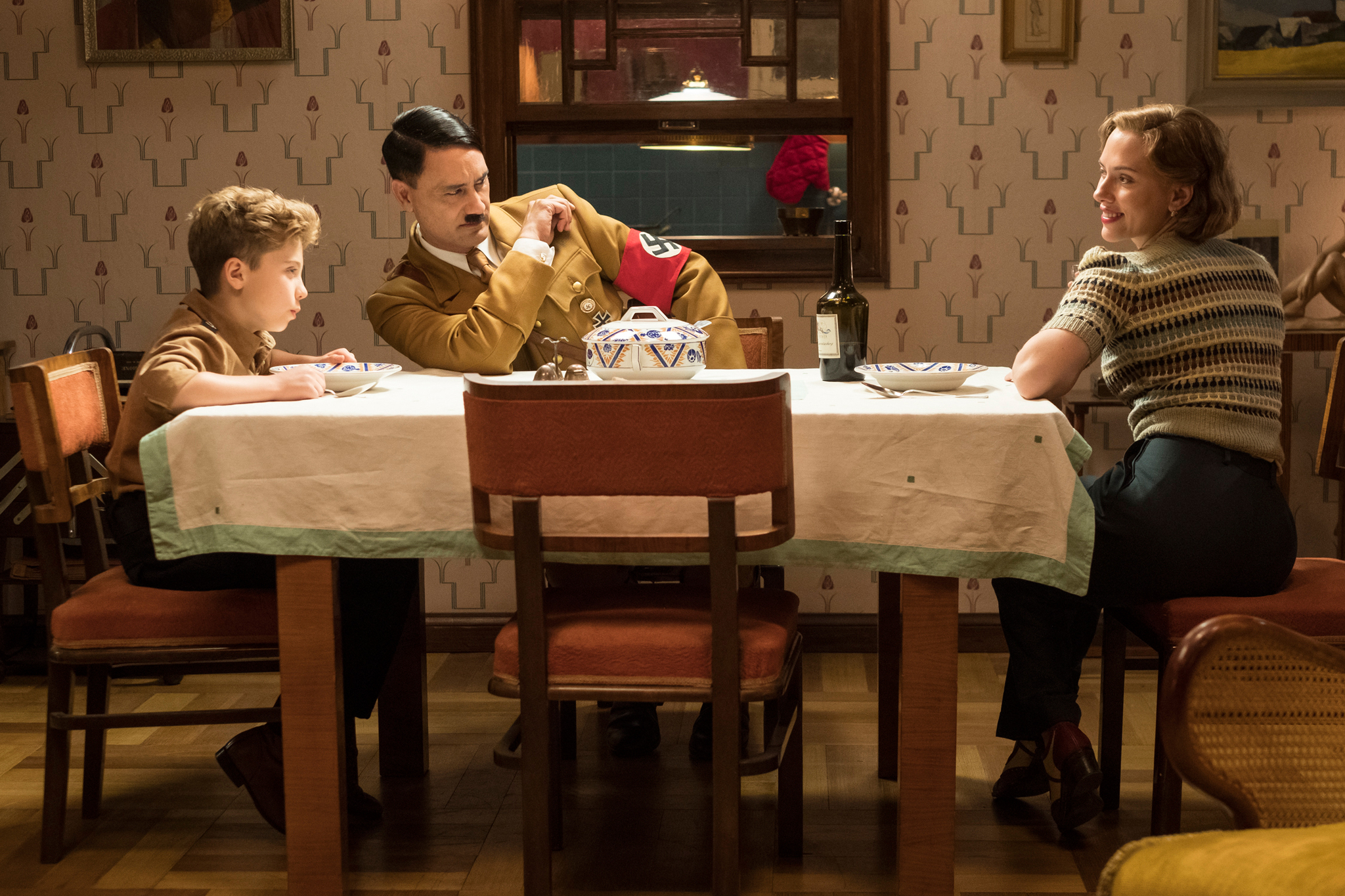 WWII Germany is not where most people would think to set a comedy, but most people aren’t Taika Waititi. Hunt for the Wilderpeople was one of my favorite movies of 2016 and coming off Thor: Ragnarok, a studio film that neutered many of his best quirks, it’s nice to see him return to a smaller scale. The script is hilarious and features another precocious boy in a coming of age story with Waititi playing the child’s imaginary friend: Hitler. The film is filled with the well-meaning buffoons and dialogue misunderstandings that make his work so consistently entertaining.
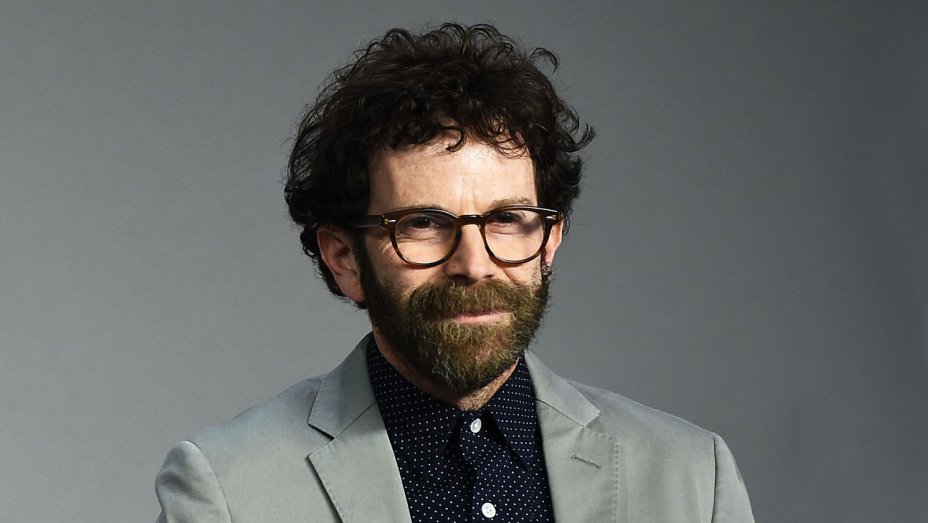 It’s been more than a decade since Charlie Kaufman (Eternal Sunshine of the Spotless Mind) released a live action feature. His movies can sometimes be too reflexive for their own good, but are always thought-provoking. With some added freedom and budget from Netflix, he can hopefully put together one of his signature introspective stories.
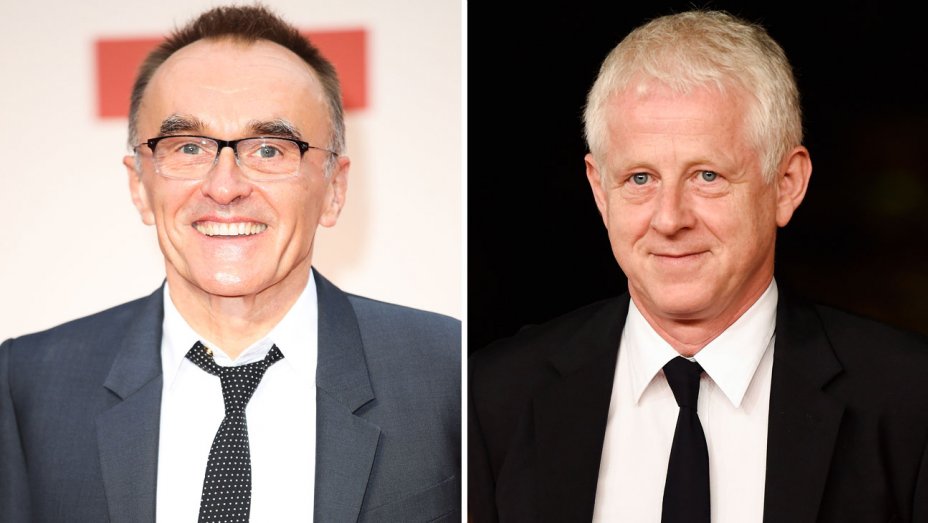 This is the most mainstream film on my list and I can’t deny my appreciation for Richard Curtis’s work (Notting Hill, About Time). Some may call him cheesy, but he creates sympathetic, endearingly awkward characters and stories with unabashed heart. The pairing of his writing with strong direction from Danny Boyle seems like a great fit. The film’s story follows a struggling musician who, for currently unknown reasons, is the only person able to remember the Beatles and uses their music to launch his own career. This silly, but promising setup with a talented cast starring Himesh Patel and Lily James could be one of the most crowd-pleasing movies of the year.
 After opening to incredible reviews at Cannes this year, Bi Gan’s sophomore feature has hit unexpected pre-sale records in China and is poised to be an arthouse breakout there. The film has received huge praise for its dreamy visuals, startling use of 3D, and a supposedly 50+ minute long take. Building off his stellar debut Kaili Blues and tackling new artistic challenges, Bi Gan is shaping up to be an original filmmaker to watch.
 Babak Anvari’s feature debut Under the Shadow was
 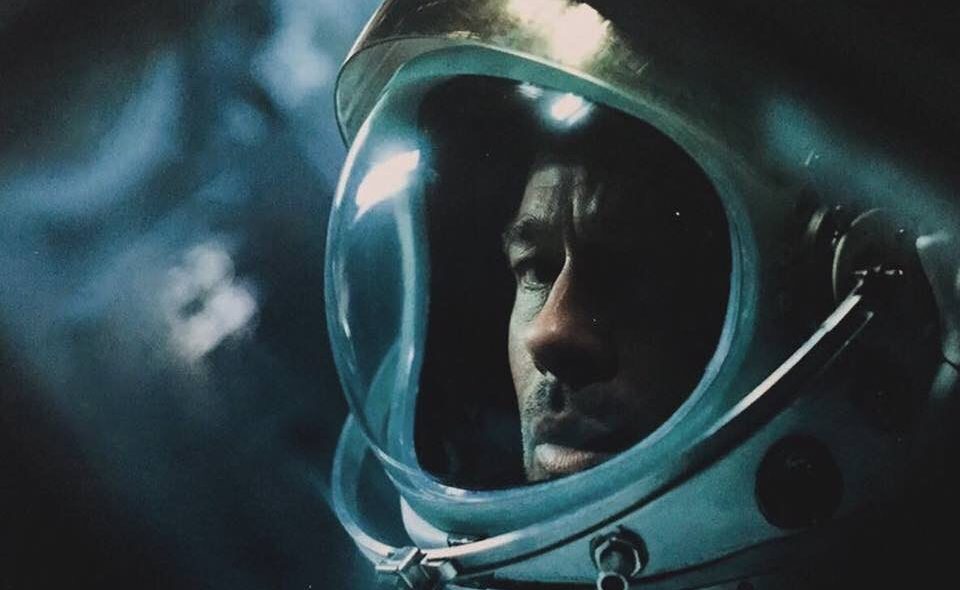 This sci-fi thriller, co-written and directed by James Gray, may be the movie that delivers on what Interstellar could not. The film stars Brad Pitt as an engineer who travels through space searching for his father, played by none other than Tommy Lee Jones, who has been missing since he left for a mission to Neptune 20 years earlier. Ad Astra has Gray’s largest budget to date and with his focus on character and proven ability to tell decade spanning epics (The Lost City of Z), it could be the smart sci-fi we’ve been waiting for.
 Gaspar Noé is one of my favorite filmmakers. He may be a provocateur and indulge himself in some unnecessary scenes, but he also creates visceral experiences like no other. Climax premiered at Cannes this year to the most positive reviews of Noé’s career, so much so that