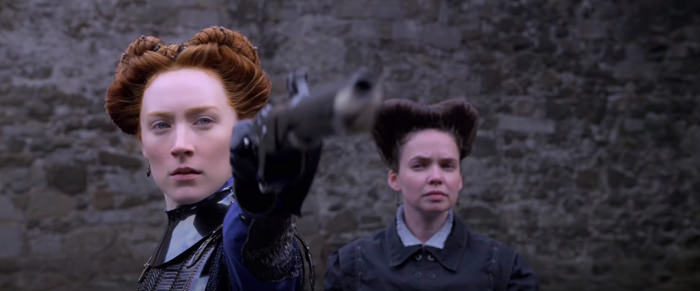
In a wealthy suburb of Mexico City in the 70s, Cleo (Yalitza Aparicio), a maid and nanny, attends to the affluent doctor’s family that employs her. She lives in a separate apartment with another staff member and spends her days taking care of the four children, husband, wife, elderly grandmother, and pet dog.
The film is shot entirely in black and white. As the much anticipated release from director Alfonso Cuarón, this marks a stark shift from his previous feature Gravity, a $100 million special effects driven thriller. He works on a much more intimate scale here and uses his images to not only set the time period but also to establish the film as a willfully humble story. Cuarón acted as his own director of photography and the visuals are gorgeous. Black and white films often receive unearned praise for their beauty, but that is not the case with Roma. The digital cinematography has incredible detail and the special attention that has gone into use of shadows, reflections, and depth of field show the work of a master visual stylist.
Cuarón has created his own version of an Italian Neorealist film. He is interested in the everyday life of the subjects in his selected microcosm and never shies away from events that could be called mundane. We see Cleo cleaning floors, doing laundry, and dressing the children. None of these actions propels the plot forward, instead they serve to establish a routine. This is a slice-of-life story and Cuarón embeds the audience in the smallest details of daily patterns. There are a few too many of these scenes, but the film’s greatest success is that most of these banal tasks aren’t boring. The film is on the longer side, but the majority of the additional scenes feel deliberate and necessary to fully comprehend Cleo’s existence.
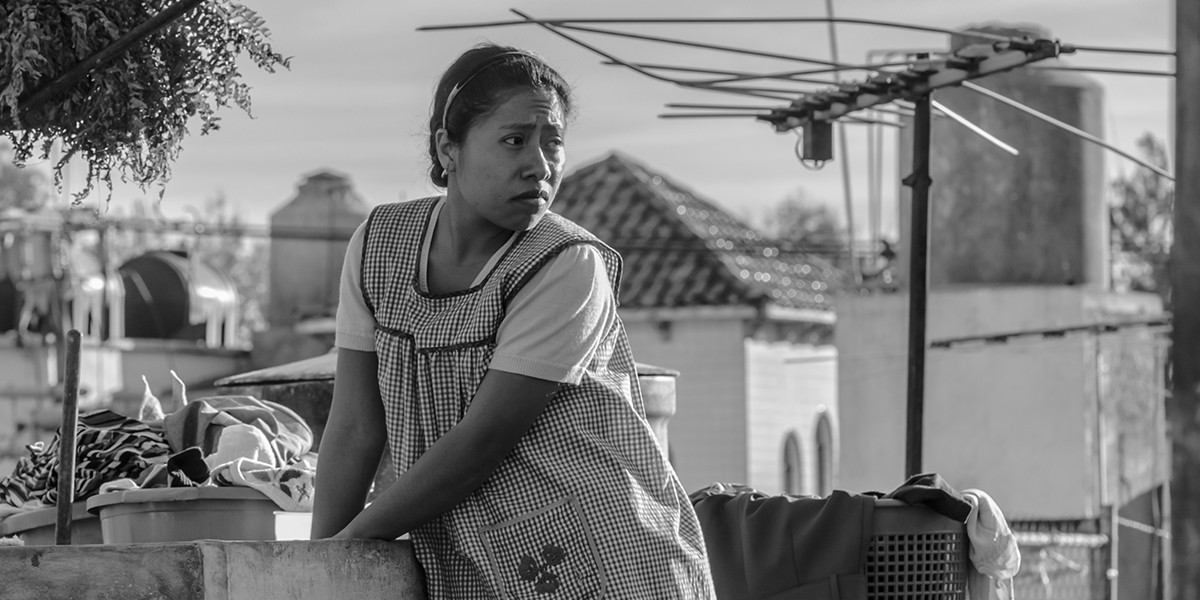
Through her interactions, we see the subtle, but firm, difference between Cleo and her employers. She may technically live in the same house and spend her days with the family, but she is distinctly not one of them. Although the children clearly have affection for her, often saying “I love you” as she tucks them into bed, and the adults care about her well-being when she is in need, they are quick to order her around and occasionally take out their frustrations on her. We never see Cleo do the same to them. No matter what personal struggle she may be facing, she isn’t afforded the luxury of rudeness because she is at the bottom of this social ladder.
There are a few moments that have a sudden impact. Once Cuarón establishes the regular rhythm of Cleo caring for the family, he introduces conflict that creates emotional reactions. These feelings are amplified by Cleo’s subdued body language. Even in the most climactic scenes, her strongest expression is a quiet sob and the resulting effect is that the viewer absorbs the remaining emotions she is unable to exhibit. This can be an incredibly powerful technique and one that Cuarón has used in the past. Unsaid emotions have a greater impact than any dialogue could deliver, but as successful as this method can be, there are too few emotional moments across the runtime and the ones that are present don’t provide a strong enough payoff. Roma is an incredibly well made film that features flashes of emotion, but not enough to take it to the next level.

3/5 stars.


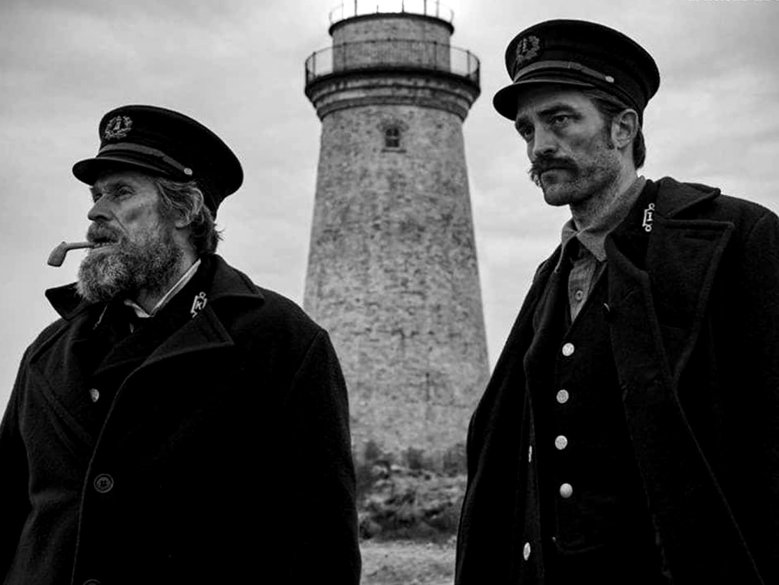 The Witch is one of the most interesting horror movies of the past few years, with meticulous period detail and escalating paranoia that few films can achieve. Robert Eggers’s follow up is sure to be in the same vein with Willem Dafoe playing an elderly lighthouse keeper in this dark horror-fantasy.
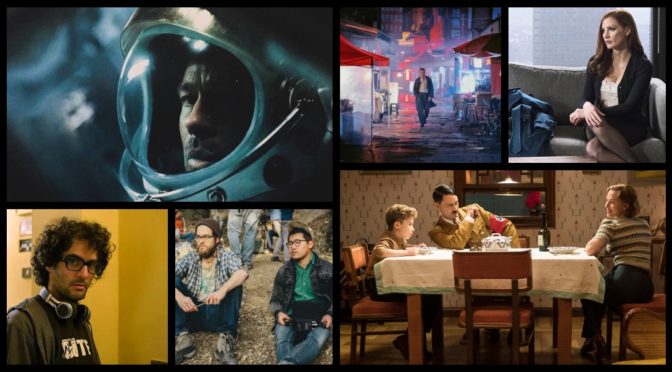
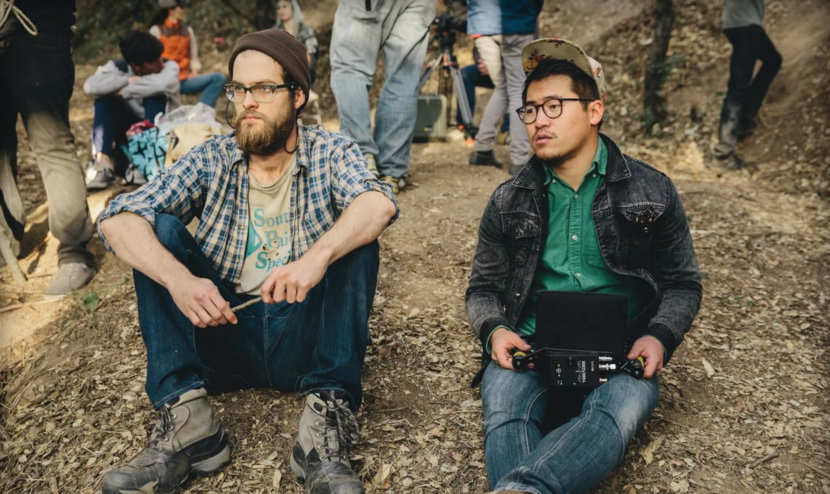 Very little is known about the newest film from the Daniels, but their involvement is enough to warrant a place on this list. The film is described as an “inter-dimensional action film” with Michelle Yeoh and Awkwafina of Crazy Rich Asians starring. I’m personally not a huge fan of Awkwafina’s style of humor, but the Daniels’ history of creating
 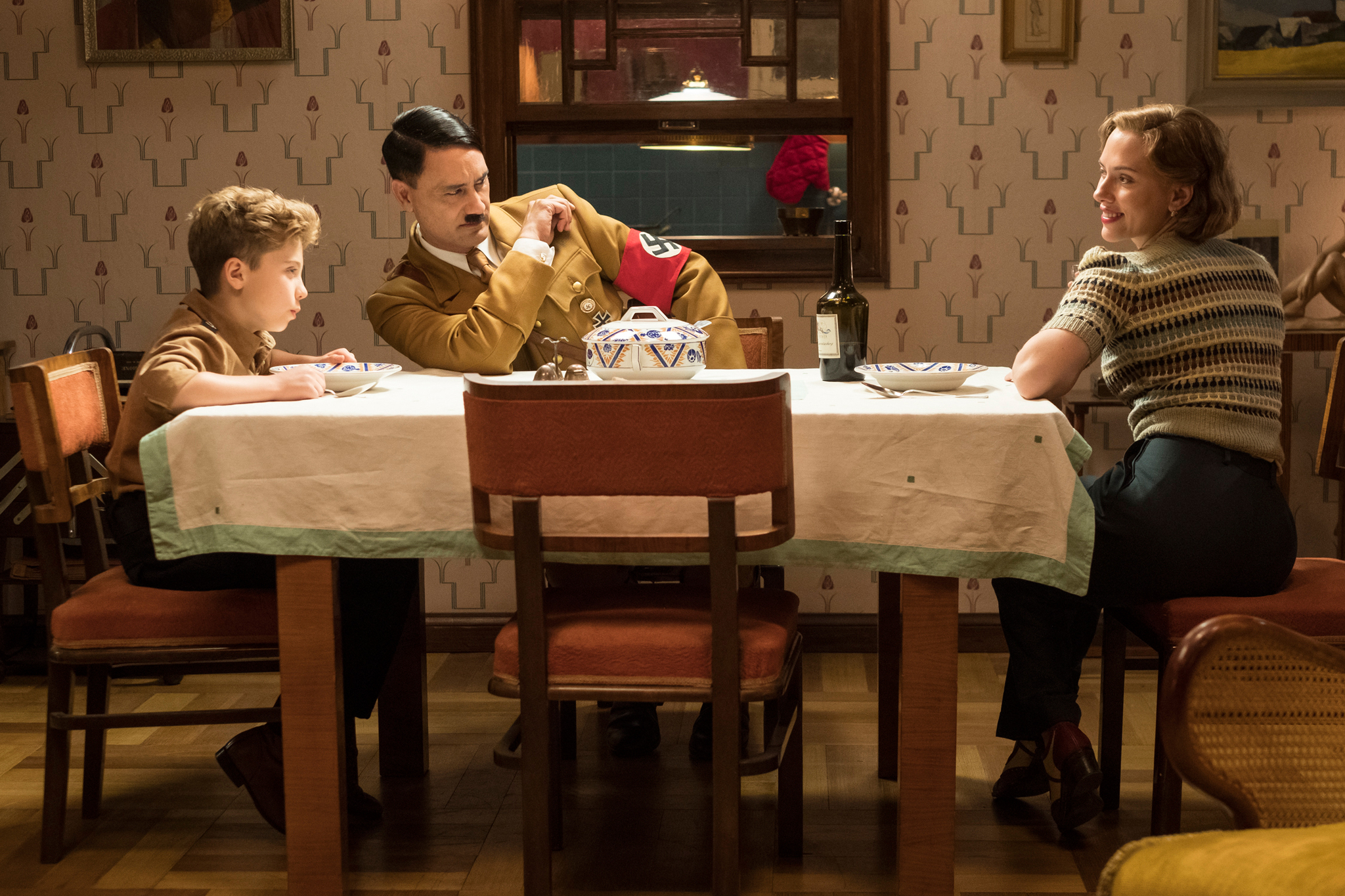 WWII Germany is not where most people would think to set a comedy, but most people aren’t Taika Waititi. Hunt for the Wilderpeople was one of my favorite movies of 2016 and coming off Thor: Ragnarok, a studio film that neutered many of his best quirks, it’s nice to see him return to a smaller scale. The script is hilarious and features another precocious boy in a coming of age story with Waititi playing the child’s imaginary friend: Hitler. The film is filled with the well-meaning buffoons and dialogue misunderstandings that make his work so consistently entertaining.
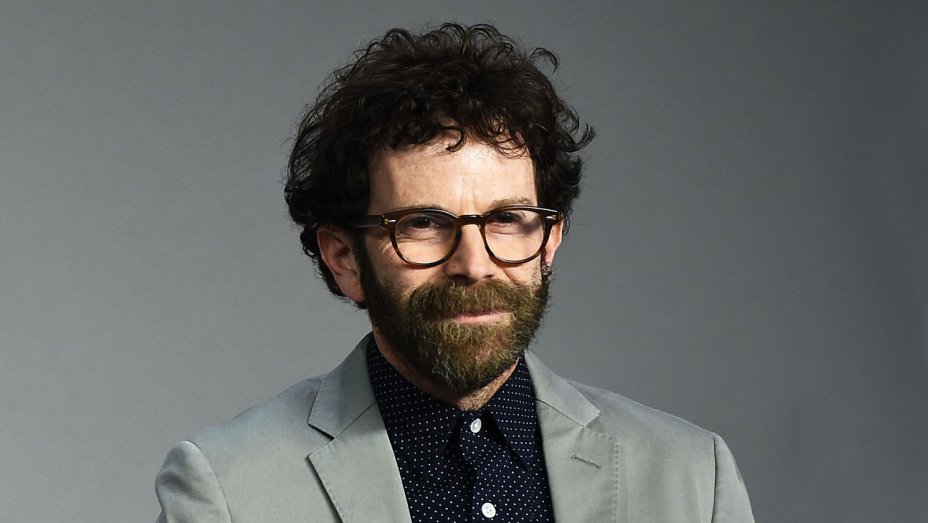 It’s been more than a decade since Charlie Kaufman (Eternal Sunshine of the Spotless Mind) released a live action feature. His movies can sometimes be too reflexive for their own good, but are always thought-provoking. With some added freedom and budget from Netflix, he can hopefully put together one of his signature introspective stories.
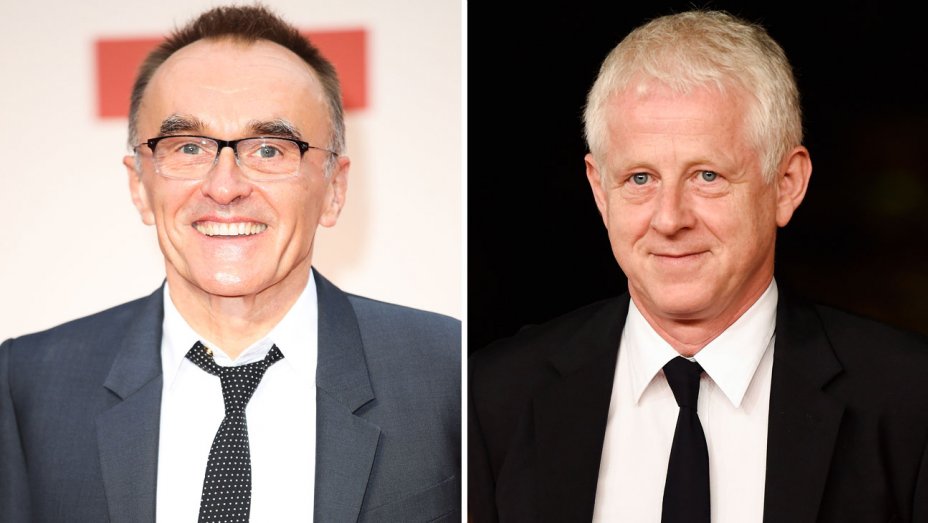 This is the most mainstream film on my list and I can’t deny my appreciation for Richard Curtis’s work (Notting Hill, About Time). Some may call him cheesy, but he creates sympathetic, endearingly awkward characters and stories with unabashed heart. The pairing of his writing with strong direction from Danny Boyle seems like a great fit. The film’s story follows a struggling musician who, for currently unknown reasons, is the only person able to remember the Beatles and uses their music to launch his own career. This silly, but promising setup with a talented cast starring Himesh Patel and Lily James could be one of the most crowd-pleasing movies of the year.
 After opening to incredible reviews at Cannes this year, Bi Gan’s sophomore feature has hit unexpected pre-sale records in China and is poised to be an arthouse breakout there. The film has received huge praise for its dreamy visuals, startling use of 3D, and a supposedly 50+ minute long take. Building off his stellar debut Kaili Blues and tackling new artistic challenges, Bi Gan is shaping up to be an original filmmaker to watch.
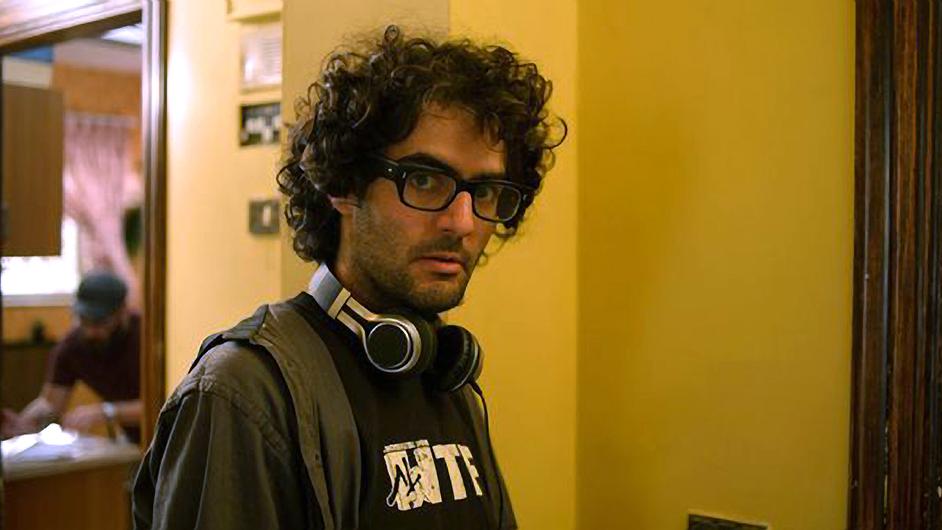 Babak Anvari’s feature debut Under the Shadow was
 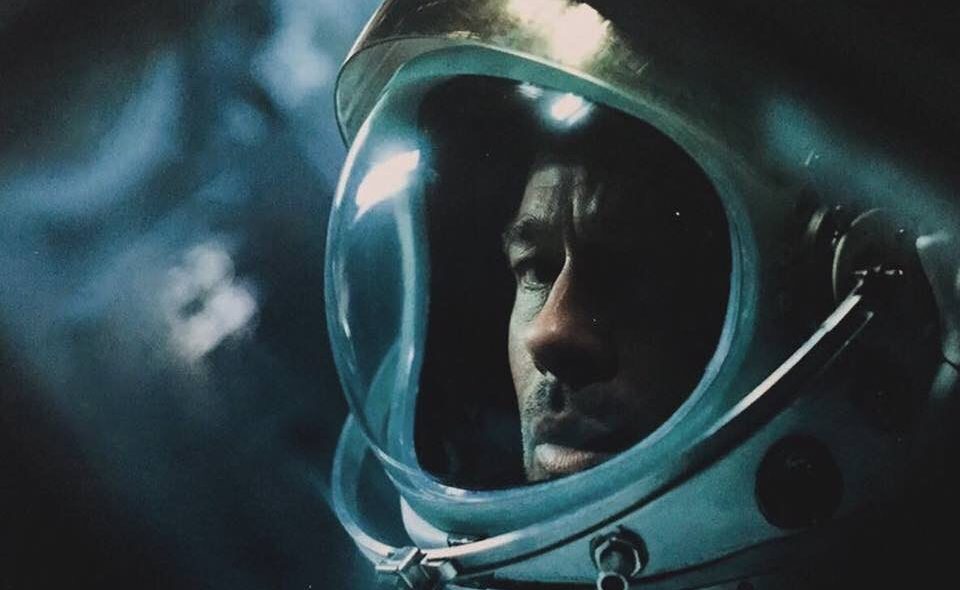 This sci-fi thriller, co-written and directed by James Gray, may be the movie that delivers on what Interstellar could not. The film stars Brad Pitt as an engineer who travels through space searching for his father, played by none other than Tommy Lee Jones, who has been missing since he left for a mission to Neptune 20 years earlier. Ad Astra has Gray’s largest budget to date and with his focus on character and proven ability to tell decade spanning epics (The Lost City of Z), it could be the smart sci-fi we’ve been waiting for.
 Gaspar Noé is one of my favorite filmmakers. He may be a provocateur and indulge himself in some unnecessary scenes, but he also creates visceral experiences like no other. Climax premiered at Cannes this year to the most positive reviews of Noé’s career, so much so that